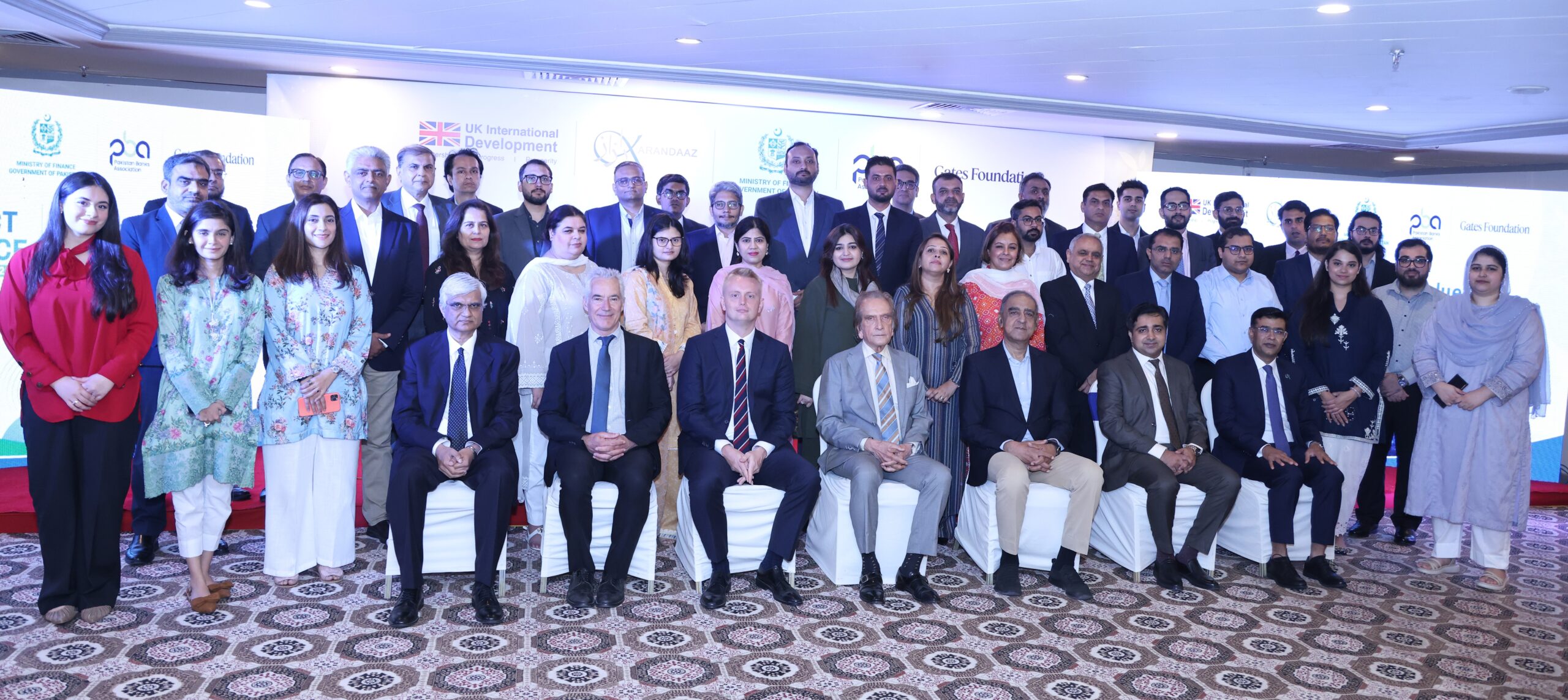
Karandaaz Pakistan, in collaboration with Pakistan Banks Association (PBA) and supported by the Ministry of Finance, hosted a two-day workshop titled “Impact Finance Training (IFT) 2026: From Value to Vision” in Karachi on 14–15 May 2026.
Building on last year’s initiative, the workshop brought together senior professionals from commercial banks, development finance institutions, and investment firms to strengthen the integration of impact finance principles into investment and lending decisions. Led by impact finance practitioner Alex MacGillivray, Executive Director at the Joint Impact Model Foundation, the sessions focused on practical frameworks to align capital allocation with measurable social, environmental, and economic outcomes.
Speaking at the occasion, Thomas Burge, Deputy Head of Mission at the British Deputy High Commission, said, “Sustainable economic growth and climate resilience will increasingly depend on the ability to mobilise private capital at scale. This requires a financial sector equipped with the right skills, tools, and frameworks to identify and deliver high-impact investments. The UK is pleased to support initiatives that strengthen this capacity and promote the integration of impact outcomes into financial decision-making in Pakistan.”
Adnan Pasha Siddiqui, Advisor to the Federal Minister for Finance & Revenue, appreciated the initiative led by Karandaaz and highlighted the importance of capacity building and skills development. He noted that the Social Impact Financing and Sustainable Finance frameworks make it clear that mobilising outcome-linked private capital is essential for advancing Pakistan’s socio-economic development and climate priorities. Recognising the scale of financing required, he added that the Government is developing an enabling policy framework to support impact investing, encourage private-sector participation, and channel capital towards measurable social, economic, and climate outcomes.
Linking the initiative to Karandaaz’s broader role in advancing impact finance, Syed Salim Raza, Chairperson, Karandaaz Pakistan, highlighted that impact finance represents an important evolution in how financial institutions assess value, risk, and long-term development outcomes. He noted that, for Pakistan, this means strengthening institutions’ ability to direct capital towards measurable economic, social, and environmental outcomes. Through this training, Karandaaz is supporting the financial sector with practical frameworks to embed impact considerations into investment and lending decisions.
In his closing remarks, Muneer Kamal, CEO & Secretary General, Pakistan Banks Association (PBA), emphasised the key role the banking sector has to play in driving sustainable and inclusive growth. He highlighted that, as the representative body of Pakistan’s banking industry, PBA remains committed to facilitating capacity building and collaboration around emerging areas such as impact finance and sustainable banking. He further noted that initiatives such as IFT 2026 help strengthen institutional understanding and develop the frameworks needed to integrate responsible, development-focused, and impact-oriented financing practices across the financial sector.
This initiative reflects the ongoing collaboration between the Ministry of Finance, Karandaaz, and PBA to strengthen institutional capacity. As demand for impact-aligned capital grows, initiatives such as IFT 2026 can help strengthen the tools, frameworks, and institutional understanding needed to build a more responsive financial ecosystem that supports long-term, inclusive growth.