
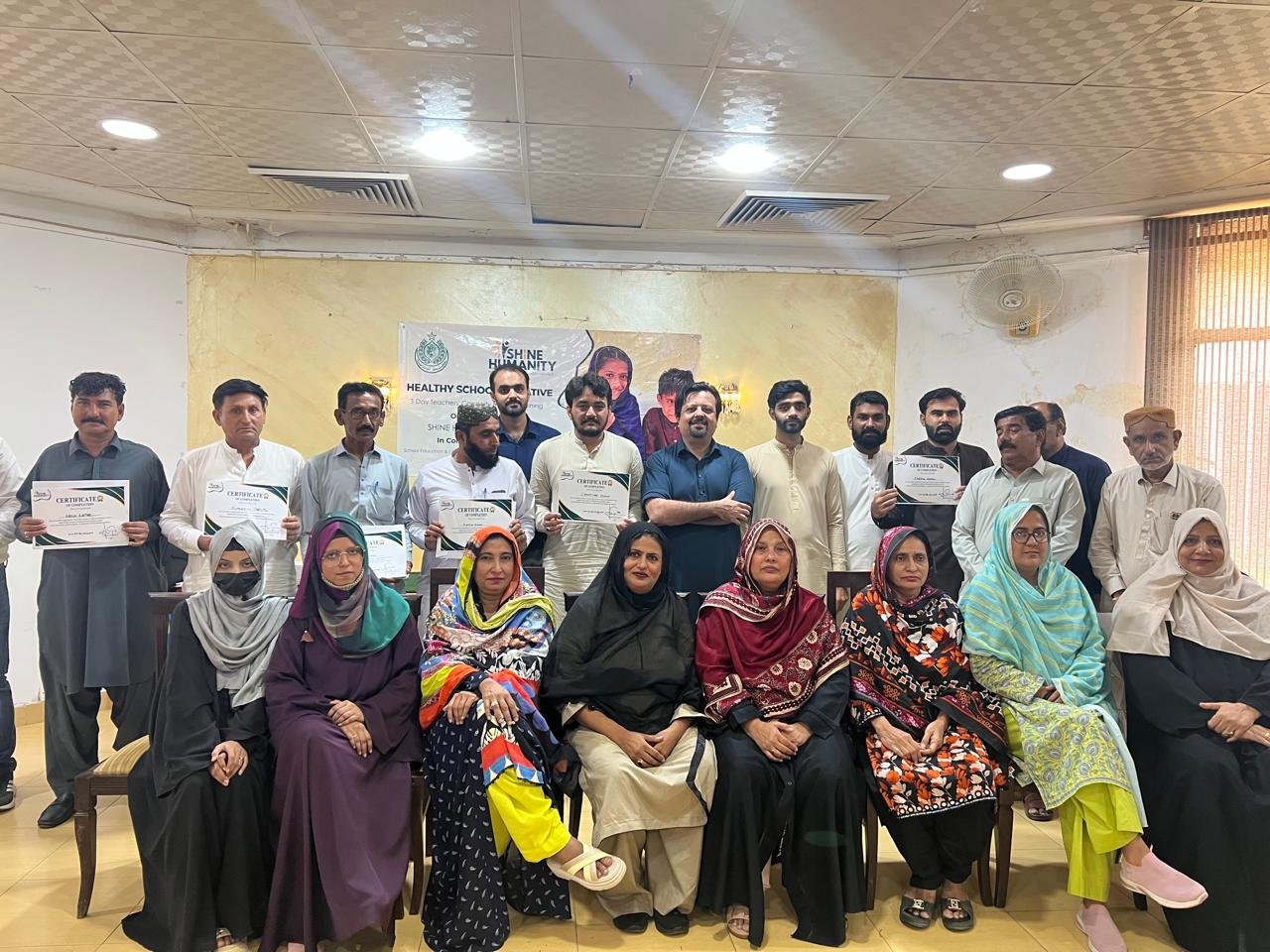
SHINE Humanity Trains Teachers to Promote Health in Schools across Sindh
SHINE Humanity, under its Healthy Schools Initiative, conducted a three-day training of teachers in August 2026, bringing together 20 government school teachers from Government Boys Primary Cluster School and Government Girls Cluster School, Gharo. The training included 9 female and 11 male participants.
The initiative is designed to promote healthier futures by equipping students in rural communities with essential knowledge about hygiene, nutrition, disease prevention, and overall wellbeing. Currently being implemented as a pilot project in District Thatta, the initiative has plans to expand to other areas of Sindh. The program delivers age-appropriate health education to primary and secondary students while also engaging teachers, parents, and school management committees.
Through a three-day training programme, teachers strengthened their knowledge of WASH (water, sanitation, and hygiene), disease prevention, first aid, nutrition, menstrual health management, mental wellbeing, child protection, life skills, substance abuse prevention, Health Clubs, community engagement, and school action planning. Equipped with these tools, they can help young people adopt healthier habits that extend beyond the classroom and into their homes.
“Health is not only about treating illness; it is also about prevention, awareness and empowering communities to make healthier choices,” Faheem Khan, CEO, SHINE Humanity. “Seeing the enthusiasm of these teachers over the past three days has been truly encouraging. When we invest in teachers, we invest in every child who walks into their classroom. Together, we can help build safer, healthier and more supportive schools for every child.”
What made the training impactful was its activity-based approach. Through demonstrations, role plays, group discussions, practical exercises, and reflection, teachers were able to connect the learning with real situations they encounter in their schools. Pre- and post-training assessments showed improved understanding of key health components, particularly WASH, where participants demonstrated clearer concepts after the training.
Teachers responded enthusiastically, with Mental Health and Child Protection emerging as the most valued sessions. Many also recommended Eye Health in future training. The programme’s practical, interactive approach boosted their knowledge and confidence, equipping them to take these lessons back to their classrooms.
By addressing health awareness at an early age, SHINE Humanity aims to reduce illness-related absenteeism, encourage positive lifestyle choices, and build stronger, healthier communities for the future.