
Advancing Digital Financial Inclusion Through the Offline Payments Innovation Challenge
As we enter 2026, accelerating digital payments adoption remains a
national priority, with intermittent connectivity persisting to be one of the most critical bottlenecks
limiting scale and inclusion. While significant progress has been made in recent years, the inability to
access stable internet or cellular coverage in many parts of the country continues to limit everyday
digital transactions. Digital payments, in particular, remain elusive for millions of users and
businesses, specifically in rural, remote, and disaster-affected areas.
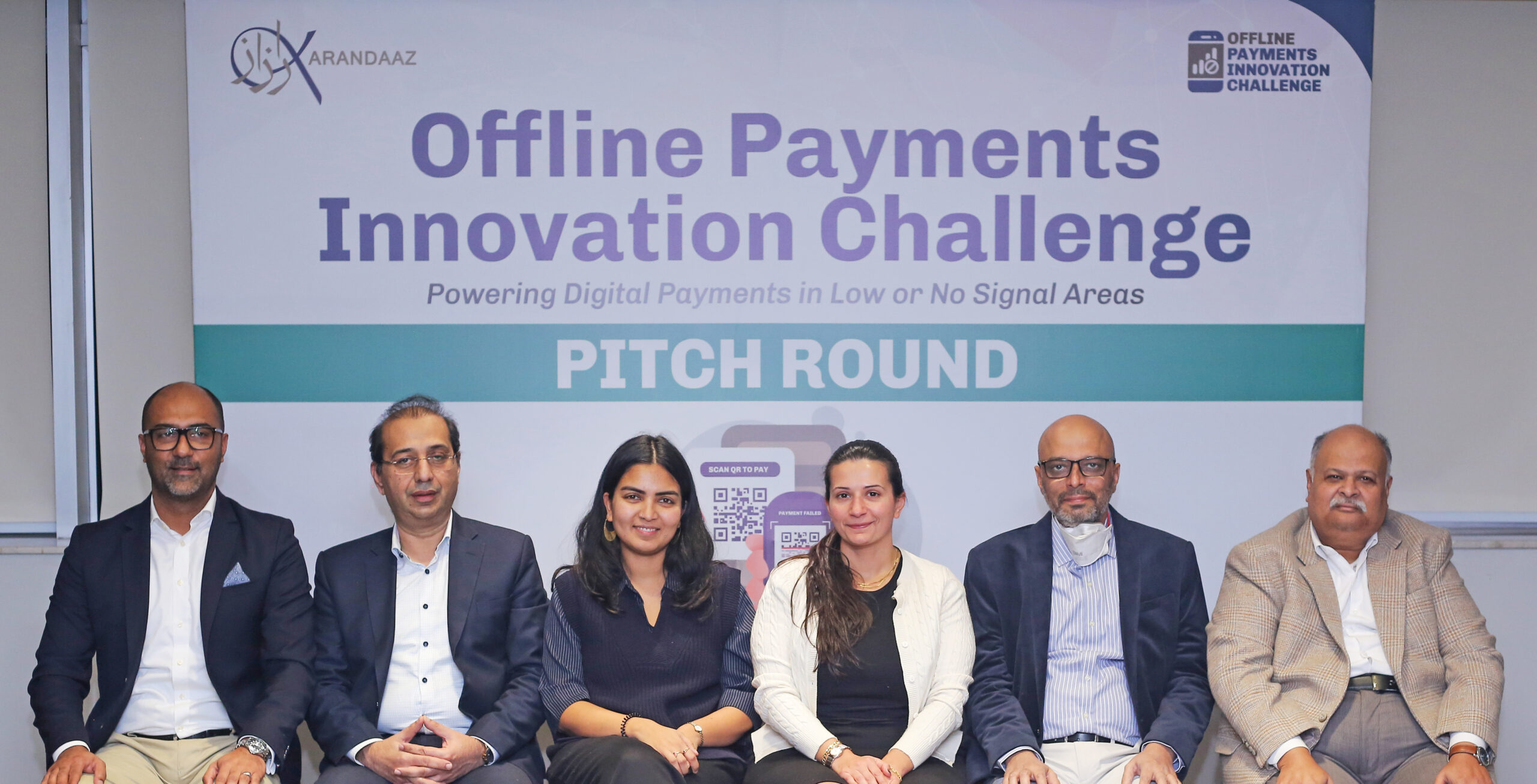
In response to this challenge, Karandaaz Pakistan convened the final pitch round of the Offline
Payments Innovation Challenge, an extensive evaluation process to identify secure and scalable
digital payment solutions leveraging Raast for environments with limited or no internet connectivity.
The initiative marks a shift from problem recognition to solution development, bringing together
innovators and ecosystem players to build practical, locally relevant technologies that can function
beyond the constraints of always-on connectivity.
The challenge attracted a strong response from across the financial ecosystem, with multiple high-
quality and innovative proposals received from startups, fintech, and technology innovators, of
which a select few were shortlisted for the pitch round. The participants presented their solutions
over two days to a six-member national and international judging panel comprising Ms Layanah Al-
Wreikat, Director, JoPacc, Jordan; Ms Sabiha Ahmed, Private Sector Development Advisor, Foreign,
Commonwealth & Development Office; Mr Shauzab Ali, Principal Project Officer, Asian Development
Bank; Mr Muhammad Imaduddin, Director, Digital Innovation & Settlement Department, State Bank
of Pakistan; Dr Zartash Afzal Uzmi, Professor and Lead, Center for Digital Assets Research, LUMS; and
Mr Sharjeel Murtaza, Chief Digital Officer, Karandaaz Pakistan.
Proposals were assessed against criteria including technical robustness, security and risk controls,
regulatory alignment, scalability, market relevance, and long-term sustainability. The solutions
demonstrated strong potential to address connectivity challenges and enable secure digital
payments in low or no-connectivity environments. The proposals with the highest potential were
shortlisted for grant support, alongside technical and regulatory guidance, and opportunities for
pilot implementation.
Commenting on the initiative, Mr Waqas ul Hasan, Chief Executive Officer, Karandaaz Pakistan, said:
“Digital payments in Pakistan cannot assume perfect connectivity, as large parts of the
country operate in low- or no-connectivity environments. In line with the national
vision for a Cashless Pakistan, led by the Prime Minister, and the broader Digital
Pakistan agenda, the Offline Payments Innovation Challenge encourages locally
relevant solutions that are secure, scalable, and aligned with the regulatory framework,
with the potential to expand access to digital financial services where it is needed
most.”
Looking ahead, initiatives such as the Offline Payments Innovation Challenge lay a sound foundation
for addressing key constraints in the digital payments’ ecosystem. By addressing the connectivity gap
head-on, Karandaaz aims to spur adoption of digital payments leveraging Raast through cutting edge
innovation leading to easy to use and affordable payment solutions that work in real-world
conditions across the country.