Businesses have raised serious concerns over restrictions on the sale of products packaged in polyethene terephthalate (PET) bottles in Islamabad, warning that a blanket ban could disrupt economic activity, undermine the established recycling industry and adversely affect government revenue.
Pursuant to directions issued by the Office of the Chief Commissioner/Chairman, Capital Development Authority (CDA), retailers and Fast-Moving Consumer Goods (FMCG) companies in ICT have verbally been instructed to discontinue the sale of products packaged in Polyethene Terephthalate (PET) bottles across multiple categories. Furthermore, since last night, local administration authorities have started enforcement actions, including the sealing of retail outlets within ICT, retailers said. Businesses warned that these developments are causing serious concern and may also adversely affect government revenue generation and broader economic activity.
A blanket prohibition on PET packaging would be scientifically unsupported, environmentally counterproductive, inconsistent with globally recognised circular economy principles, and detrimental to businesses operating in Pakistan. Such a measure also appears inconsistent with both the spirit and objectives of the ICT Single-Use Plastics (Prohibition) Regulations, 2023, as well as prevailing international best practices.
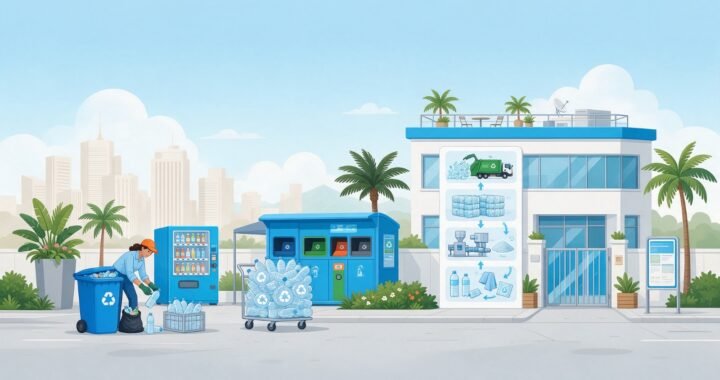
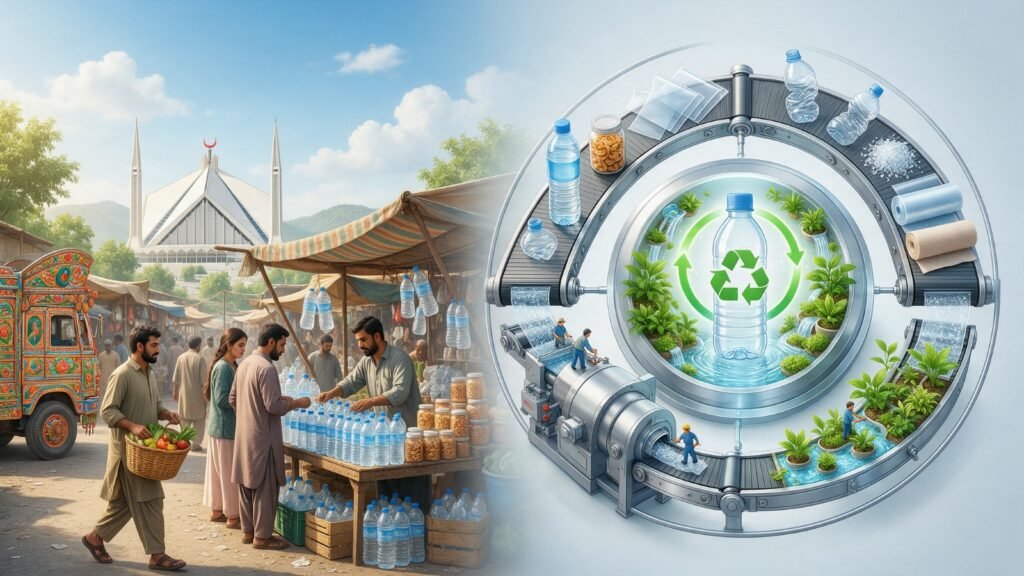
PET is a lightweight, food-grade, and fully recyclable material supported by a well-established collection and recycling value chain. Unlike several other packaging materials, post-consumer PET bottles possess substantial commercial value and are actively utilised for the production of fibres, packaging materials, and recycled bottles. The existing PET recycling ecosystem supports economic activity and livelihoods across the waste collection, sorting, and recycling sectors. A blanket ban on PET packaging risks undermining this established circular economy framework.
Moreover, internationally accepted scientific life-cycle assessments evaluate packaging materials holistically, considering raw material extraction, manufacturing, transportation, collection, recycling, and end-of-life management. Replacing PET with alternatives such as glass, aluminium, or other single-use materials may not necessarily yield superior environmental outcomes, as heavier materials can significantly increase transportation-related emissions, while others may require greater energy and resource consumption during production. Accordingly, policy focus should remain on strengthening collection, segregation, recycling, and waste management systems to prevent environmental leakage, rather than prohibiting a recyclable and economically valuable material.
Leading international regulatory frameworks, including the European Union’s Packaging and Packaging Waste Regulation (PPWR), prioritise packaging recyclability, effective collection and recycling systems, and Extended Producer Responsibility (EPR) mechanisms instead of imposing blanket bans on recyclable PET beverage packaging.
Similarly, the ICT Single-Use Plastics (Prohibition) Regulations, 2023, promulgated under the Pakistan Environmental Protection Act, 1997, already provide an appropriate regulatory basis to address plastic waste management challenges. In our respectful view, the emphasis should be on robust implementation through producer-funded collection and recycling mechanisms, measurable recovery targets, waste segregation at source, and investment in recycling infrastructure.